

By Alhassan Somed Dasana, Executive Director, Nanung Peace Initiative (NPI)
Across the globe, young people represent the heartbeat of nations. They are the dreamers, the innovators, and the driving force for peace. In every community, it is the youth who carry the energy, the creativity, and the courage to transform challenges into opportunities.
Peace is not merely the absence of conflict; it is the presence of justice, tolerance, and unity. In this regard, the role of young people is indispensable. Across the Gbewaa Kingdom in the northern part of Ghana, and beyond, youth are proving that their voices matter. They are standing against violence, promoting dialogue, and bridging divides across tribes, faiths, and political lines.
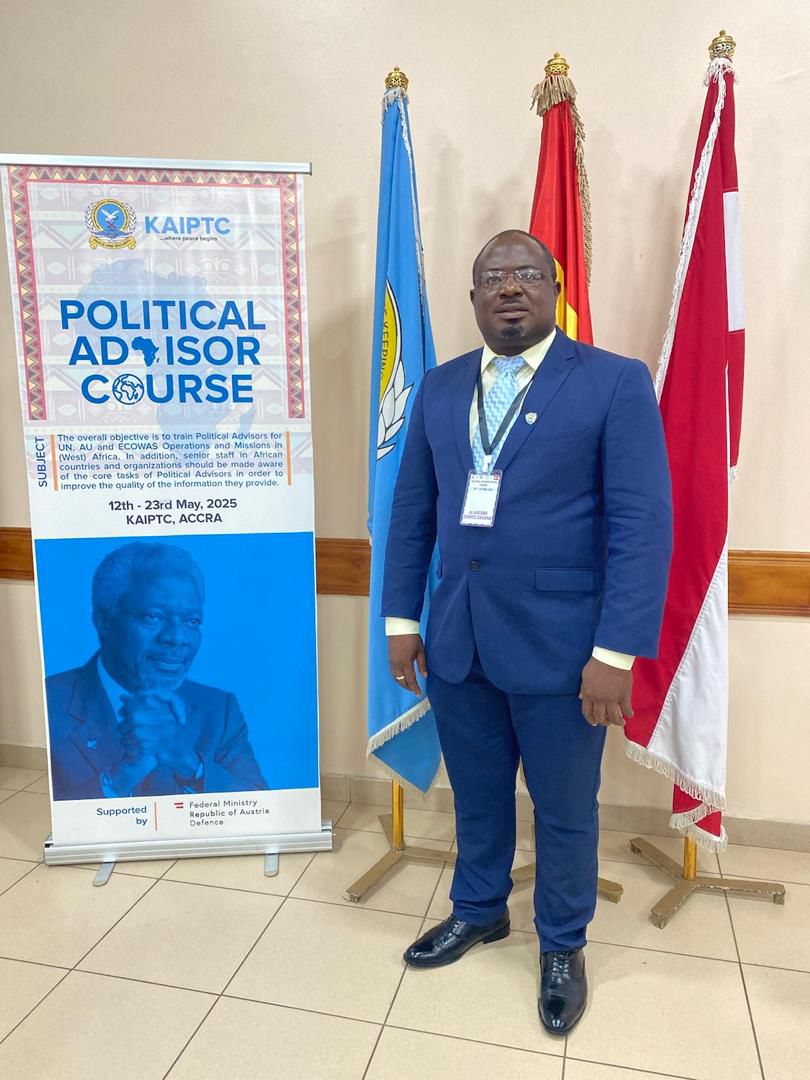
As a person who has just graduated from the Political Advisors Course at the Kofi Annan International Peacekeeping Training Centre (KAIPTC), with participants drawn from nine West African countries, I see even more clearly the urgent need to invest in youth leadership for peacebuilding.
This opportunity was made possible through the generous sponsorship of my course by the Federal Ministry of Defence of the Republic of Austria. Their commitment to supporting youth leadership in Africa is a shining example of how international partnerships can strengthen peacebuilding at both local and global levels.
The course highlighted the importance of inclusive governance, regional cooperation, and conflict prevention lessons that are directly relevant to our communities in Ghana and across the Gbewaa Kingdom. It became evident that without empowering the youth, who are often at the center of political mobilization, chieftaincy disputes, land disputes, and tribal conflicts, sustainable peace will remain elusive.
The Nanung Peace Initiative (NPI) believes that when youth are empowered with education, skills, and opportunities, they become true ambassadors of peace. Too often, young people are exploited as instruments of violence in disputes; yet, when engaged positively, they have the power to turn tensions into dialogue and mistrust into reconciliation.
By involving youth meaningfully in governance, conflict resolution, and traditional decision-making, societies can build stronger foundations for peace. Young people can play a central role in preventing election violence, mediating chieftaincy disagreements, promoting fair land access, and reducing tribal tensions.
Yet, the responsibility is not for youth alone. Traditional leaders, government institutions, and international partners must create safe spaces where young people are heard, respected, and supported. Investing in youth is investing in peace.
As the world grows increasingly interconnected, the strength of our kingdoms and nations will depend on how well we prepare our young people to lead with wisdom, patience, and integrity.
The call is clear: youth are not just the leaders of tomorrow, they are the force for peace today.
With special gratitude to the Federal Ministry of Defence of the Republic of Austria, whose sponsorship made my participation in the KAIPTC Political Advisors Course possible. Your support is not only an investment in me, but in the youth of Ghana and the wider West African region.
Alhassan Somed Dasana
Executive Director
Nanung Peace Initiative (NPI)